 MIOSA
x
MIOSA
x
 Phase 1 proposal
Client discussion draft
22.07.26 / revision 2
Subject to written agreement
Pritt Investment Partners
Build the operating foundation, then prove it inside one department.
A USD 20,000 Phase 1 engagement that turns Pritt's current agents, business knowledge, roles, and one real operating workflow into a governed BusinessOS implementation.
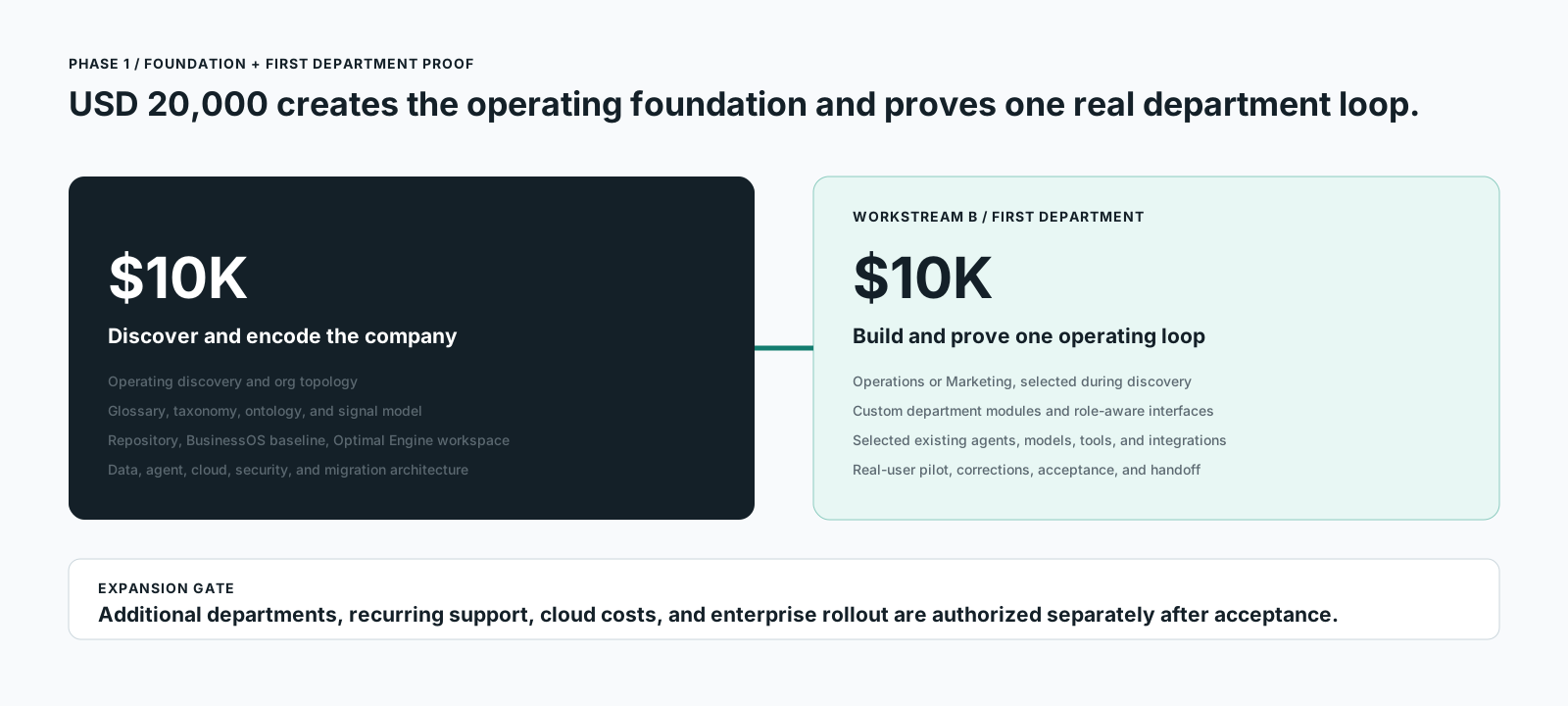
Workstream AUSD 10,000 for discovery, language, architecture, current-state ingestion, and implementation foundation.
Workstream BUSD 10,000 for one department proof, real-user validation, corrections, documentation, and acceptance.
The decision in front of Pritt
Do not start with nine agents or nine departments. Start by making Pritt's operating model explicit, then prove one complete loop.
30Approximate people operating across Pritt's company structure.
9Executive circles represented by human leaders and specialized AI roles.
1Department selected for the first operational proof.
$20KTotal Phase 1 investment, divided into two accountable workstreams.
The system must know where work lives, who owns it, which context applies, what the expected output is, and how the result returns as evidence.
What Pritt already has
Agents, role concepts, operating knowledge, and executive intent
Those assets are valuable inputs. They are not yet a shared operating system for employees.
What Phase 1 creates
A governed company model and one accepted department workflow
BusinessOS becomes the interface. Optimal Engine becomes the context, memory, policy, and evidence layer.
Recommended pilot: choose Operations or Marketing based on operator commitment, accessible data, visible pain, and a measurable workflow.
How the architecture becomes correct
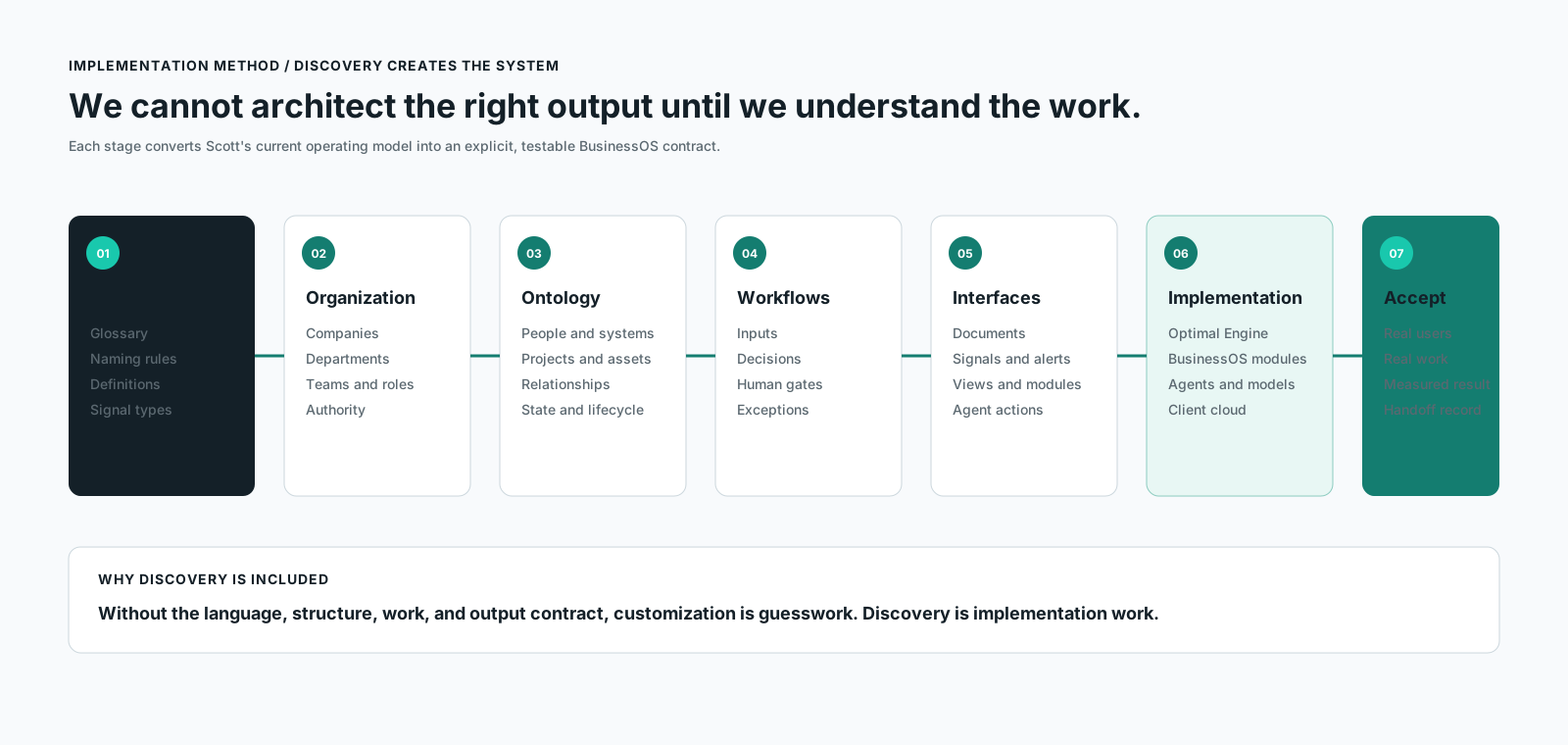
We define the language of the business before configuring the software that operates it.
GlossaryWhat words mean
Canonical definitions for departments, roles, projects, decisions, risks, documents, signals, and outcomes.
TaxonomyHow work is classified
Shared types for entities, workflows, documents, signals, statuses, priorities, and operating events.
OntologyHow work relates
Ownership, authority, dependencies, evidence, handoffs, permissions, and relationships between operating objects.
Why this matters: without the language and relationship model, the interface can look complete while agents retrieve the wrong context, act with the wrong authority, or create outputs that nobody owns.
Organization to evidence
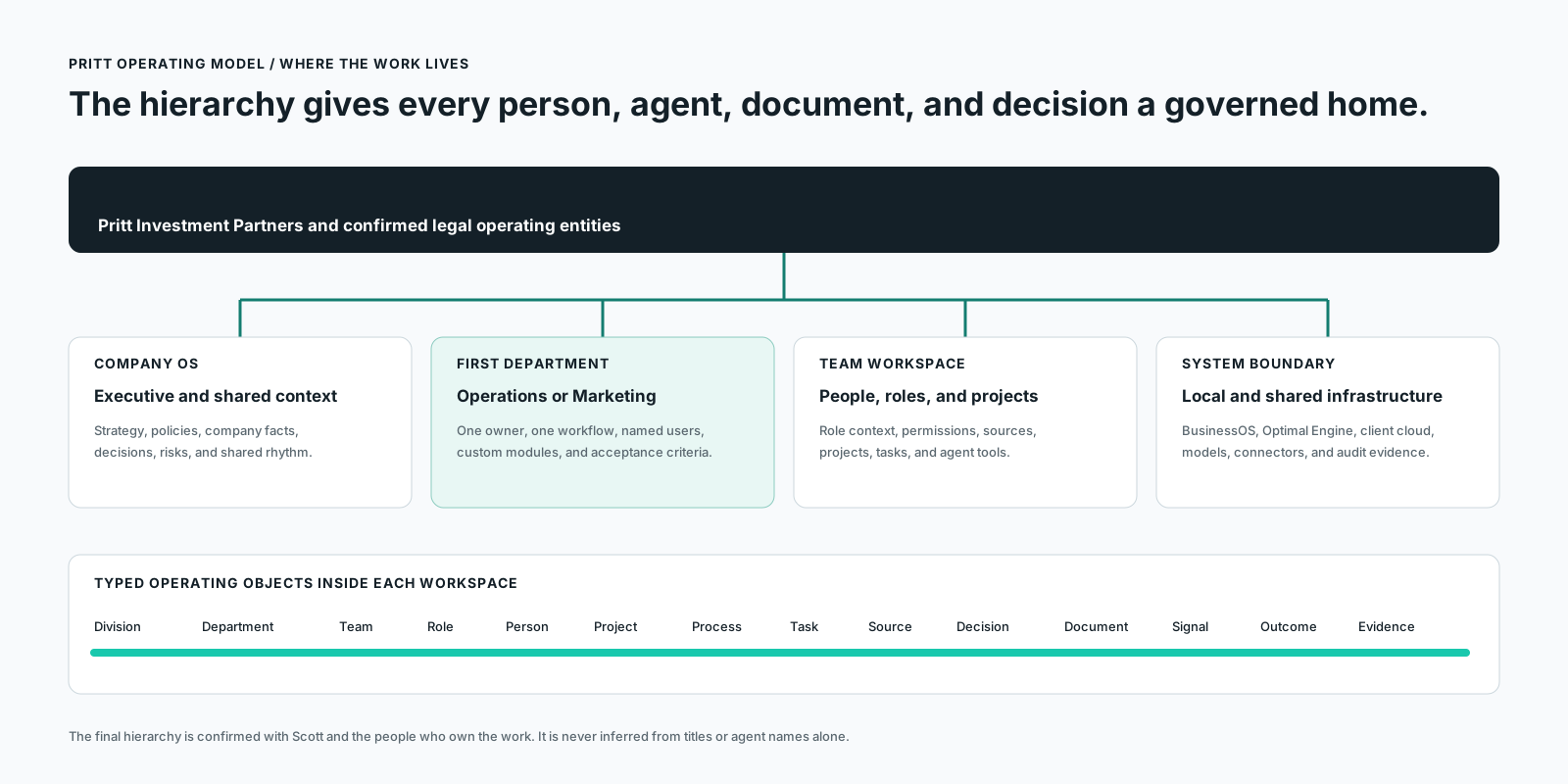
Pritt's company structure becomes an explicit hierarchy, not a collection of prompts and disconnected files.
| Layer | What it controls | Example |
|---|
| OrganizationPritt | Identity, company policies, shared definitions, cloud boundary, and global authority. | Pritt Investment Partners |
| WorkspaceDepartment | Operational context, members, modules, agents, permissions, rhythm, and department memory. | Operations or Marketing |
| NodeWork object | Project, client, asset, workflow, offer, decision, risk, or recurring operating object. | Capital project or campaign |
| SignalChange or request | What happened, what is needed, who should respond, and what evidence must return. | Approval request or exception |
| Memory objectAccepted knowledge | Facts, decisions, lessons, commitments, and provenance that can safely inform future work. | Accepted investment criterion |
Boundary decision: discovery determines what remains local, what synchronizes to Pritt's cloud, who can see it, and which actions require approval.
From input to learned outcome
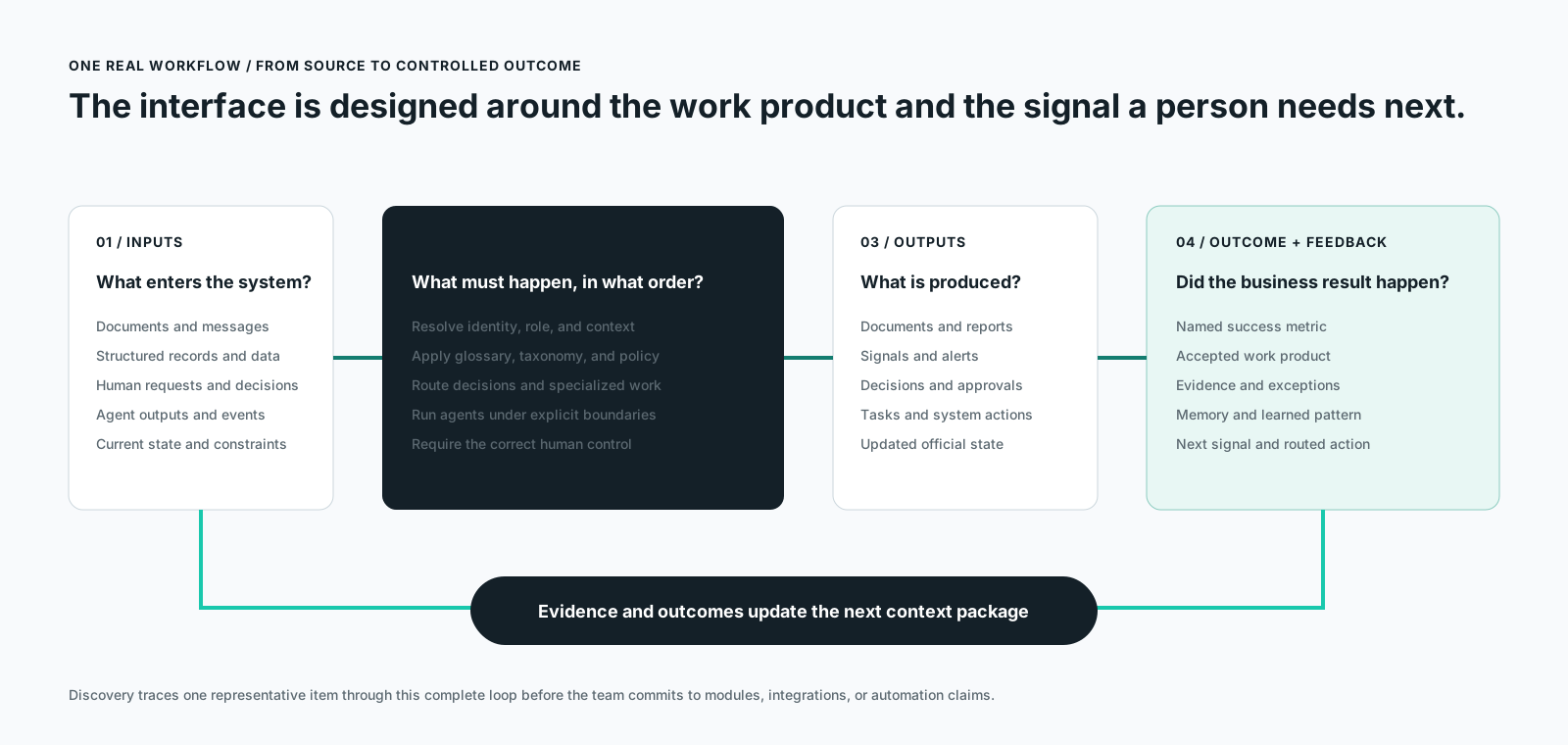
Every pilot workflow is designed backward from the outcome Pritt needs to observe.
InputsWhat enters the system
Requests, meetings, email, documents, CRM records, financial data, forms, alerts, and human instructions.
Governed processWhat the system does
Classify, retrieve context, select the agent, apply policy, request approval, execute, and record evidence.
OutputsWhat people receive
Documents, decisions, tasks, recommendations, updated records, messages, dashboards, and escalations.
Outcome and feedbackWhat proves value
Accepted work, corrected assumptions, cycle time, completion, revenue, risk reduction, and reusable memory.
Acceptance principle: a workflow is complete when a named user can produce the expected result, inspect how it happened, correct it, and return the result to the system as evidence.
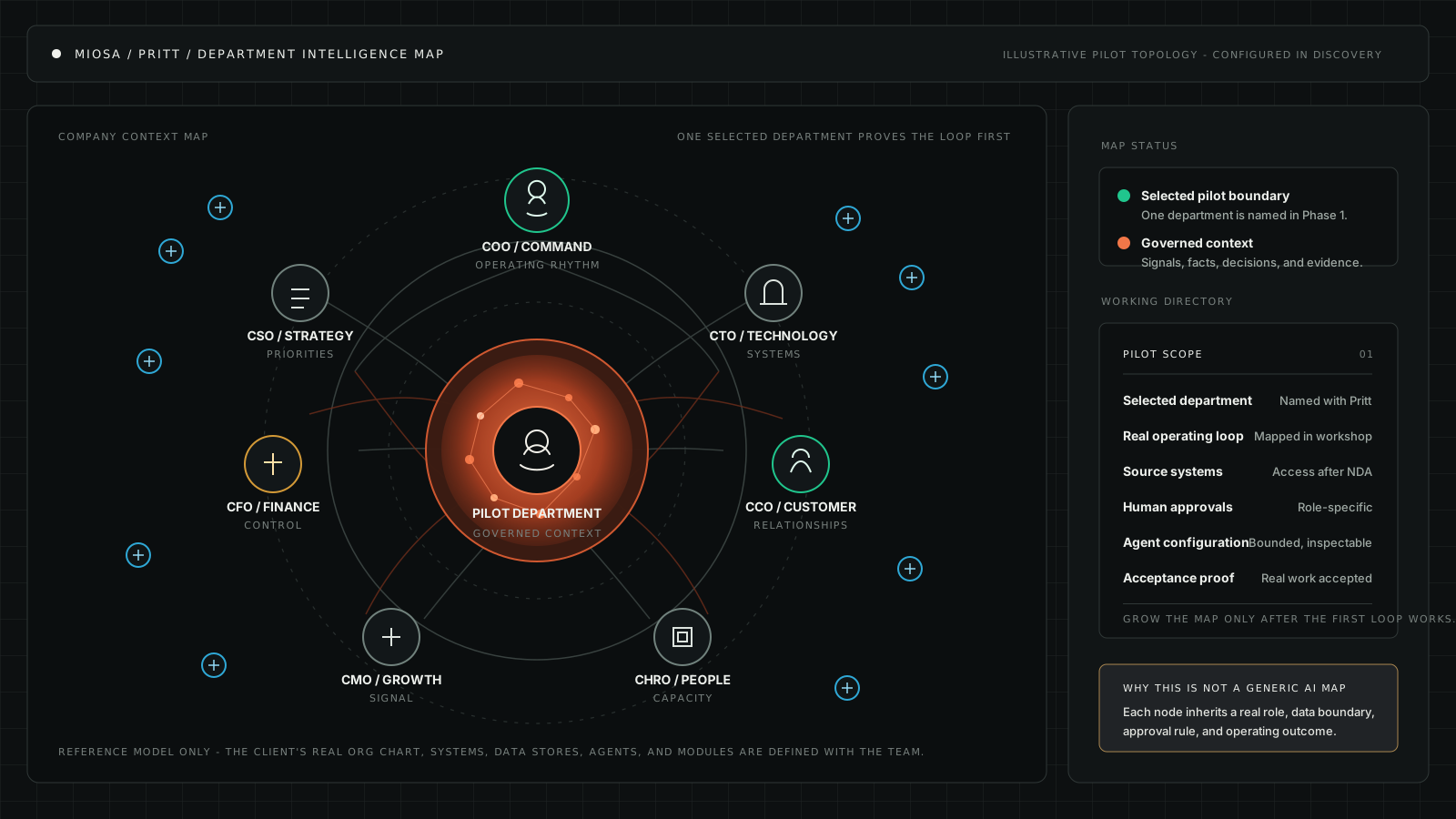
One department, one governed operating memory
The pilot gives a department a usable second brain connected to real work, not a loose collection of prompts.
What is deliberately not assumed: the selected department, source systems, model provider, integrations, approval model, and final interface are decided with Pritt during the paid discovery workstream.
Inspection, not black-box automation
The first department should make its operating work more visible before the team tries to scale it.
Phase 1 outcome: Pritt receives a configured, inspectable proof for one department with a named outcome, role boundaries, real work evidence, and a clear acceptance decision.
Two workstreams, one accepted foundation
The first USD 10,000 defines and builds the foundation. The second USD 10,000 proves it with real work.
Workstream A
USD 10,000
Discovery workshops, glossary, taxonomy, ontology, org and workspace architecture, current-state ingestion, security boundary, repository structure, and implementation blueprint.
Workstream B
USD 10,000
One department module set, selected agent configuration, agreed integrations, real-user pilot, controlled corrections, documentation, handoff, and acceptance record.
| Gate | Evidence required | Decision |
|---|
| Foundation reviewAfter Workstream A | Approved language, hierarchy, workflow model, boundaries, artifacts, and implementation plan. | Authorize the department proof. |
| Pilot acceptanceAfter Workstream B | Named users complete the agreed workflow and the evidence, permissions, corrections, and handoff are recorded. | Accept, correct within scope, or plan expansion. |
Not included unless added in writing: additional departments, unlimited integrations, company-wide migration, third-party fees, cloud consumption, production service levels, and continuing operational support.
Optional after Phase 1 acceptance
Pritt can own the accepted system directly or retain the team for continuing operation and expansion.
Maintenance and support
From USD 5,000 / month
System health review, dependency updates, incident response during agreed hours, minor corrections, documentation upkeep, and a monthly operating review. Capacity and response targets require a signed support schedule.
Optimization and expansion
From USD 10,000 / month
Everything in maintenance plus active workflow optimization, controlled module enhancements, agent evaluation, data-quality work, analytics, and preparation for additional department implementations.
Pritt-owned pathOperate internally
- Pritt owns its accounts, credentials, cloud, business data, and accepted artifacts.
- The team completes handoff and documents the operating boundary.
- New work is authorized as a project when needed.
Managed pathRetain MIOSA x Merydian
- Choose support based on actual operating needs.
- Define capacity, response expectations, exclusions, and renewal terms.
- Review evidence monthly before increasing scope.
No automatic commitment: recurring service begins only after Phase 1 acceptance and a separate written support agreement.
First client working session
Bring the people who own the work, the current system, and one real example from beginning to end.
Pritt sends before the session
- Current organization chart
- Department roster and authority
- Existing agent commands and soul files
- Current tools, systems, and integrations
- Sample documents and expected outputs
- One workflow with real source material
- Security and cloud requirements
- Known pain, failures, and success measures
Required participants
- Scott as executive sponsor and acceptance authority.
- The selected department owner.
- At least one operator who performs the workflow.
- Pritt's technical or security owner.
- MIOSA architecture lead and Merydian delivery lead.
Working output: one accepted language map, workflow map, boundary map, artifact register, implementation backlog, and decision record.
The next step is to select Operations or Marketing, send the current-state package, and schedule the discovery workshop with the people who actually perform and approve the work.
Commercial next step: convert this discussion draft into a signed statement of work with dates, payment schedule, named owners, assumptions, and acceptance criteria.