MIOSA iconMIOSAxMerydianInternal only
Opportunity and delivery plan
Scott Tripp / Pritt
22.07.26 / revision 2

Decision brief

Sell the foundation and first proof, not the entire nine-circle vision.

Internal alignment for converting a broad BusinessOS opportunity into a controlled USD 20,000 Phase 1 engagement with explicit discovery, acceptance, expansion, and support gates.

Client sponsorScott Tripp, Pritt Investment Partners.

Delivery chainMIOSA architecture and product, Merydian commercial and relationship ownership, Pritt business and technical owners.

MIOSAxMerydian
01 / Opportunity signal

What the call established

The opportunity is real, but the current state is conceptual and under-documented. Discovery is the first paid implementation work.

30Approximate people across a multi-company operating structure.
10Approximate active AI users mentioned in the discussion.
9Executive circles represented by humans and specialized agent roles.
2Candidate first departments: Operations or Marketing.
Signal from ScottMeaningDelivery implication
Existing commands and soul filesThere is reusable work, but its quality and architecture are unverified.Request the complete current-state package and inventory before promising reuse.
No GitHub workflow todayPritt may not have technical change control or a handoff model.The team establishes repositories and teaches the ownership process.
Broad nine-circle ambitionThe vision is larger than a safe first scope.Contract only the foundation and one department proof.
Interest in local agents and shared accessDeployment and data placement require deliberate architecture.Validate local, cloud, identity, permissions, and collaboration boundaries in discovery.
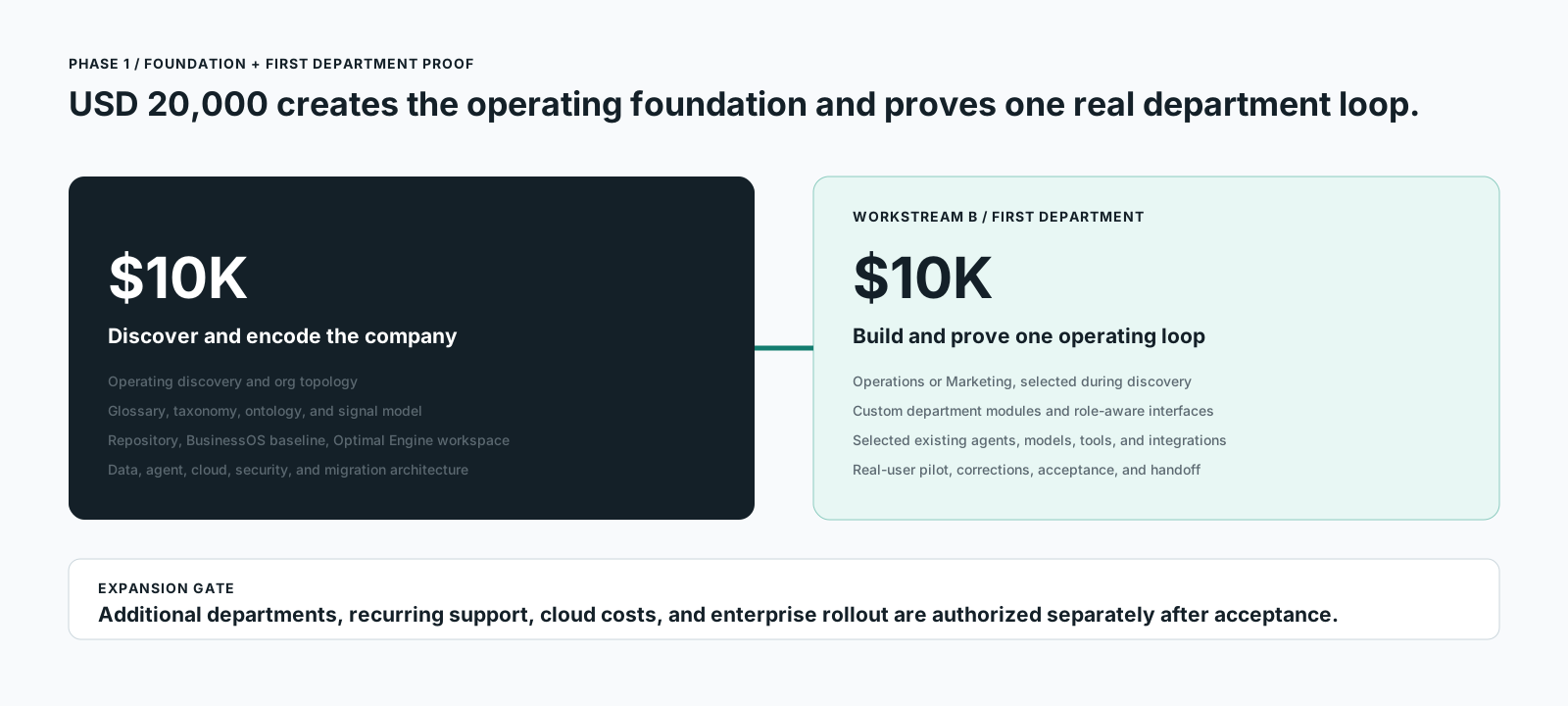
Commercial recommendation: Phase 1 at USD 20,000, divided into a USD 10,000 foundation workstream and a USD 10,000 first department proof.
MIOSAxMerydian
02 / Scope architecture

Discovery before customization

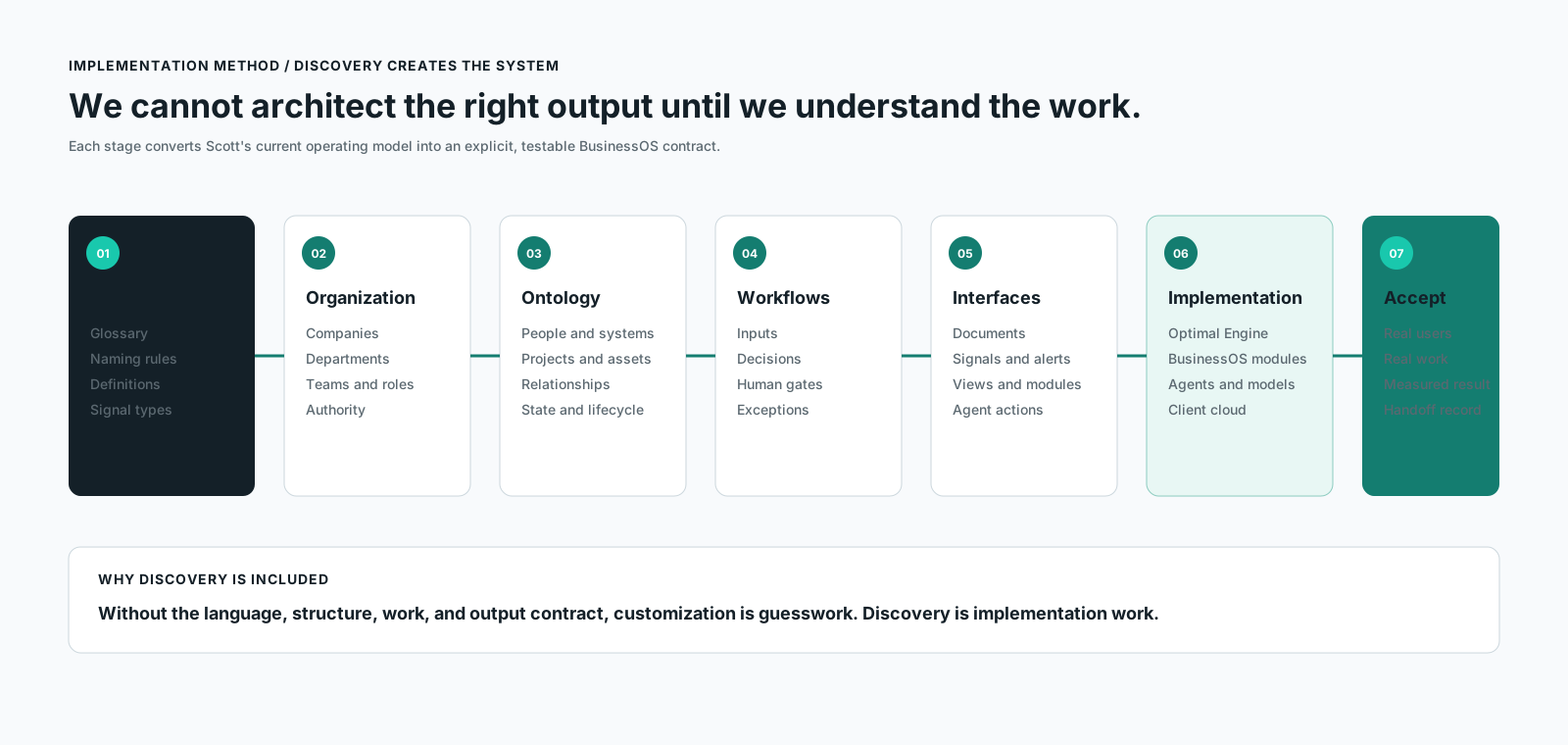
The team must understand the business language, work objects, relationships, interfaces, and evidence before building modules.

Discovery to implementation
Discover

What exists

Org chart, people, roles, agents, systems, data, documents, workflows, policies, pain, and technical constraints.

Model

What it means

Glossary, taxonomy, ontology, work location, authority, signals, interfaces, and outcome contracts.

Implement

What users operate

BusinessOS modules, Optimal Engine configuration, agent contracts, integrations, tests, and deployment.

Message discipline: do not promise to migrate every agent, automate every department, or host the entire company during Phase 1. Promise an approved foundation and one accepted operating loop.
MIOSAxMerydian
03 / Commercial model

Controlled commitment

Make every payment correspond to a visible decision and acceptance gate.

Phase 1 commercial sequence
Phase 1AUSD 10,000

Paid discovery, domain model, boundary decisions, current-state ingestion, repository structure, and implementation blueprint.

Phase 1BUSD 10,000

First department modules, selected agent integration, agreed connections, pilot, corrections, documentation, and acceptance.

Optional supportUSD 5,000 / month

Maintenance, agreed incident response, dependency updates, minor corrections, documentation, and monthly review.

Optional optimizationUSD 10,000 / month

Active workflow optimization, module improvements, agent evaluation, analytics, and expansion preparation.

Contract controls: define payment timing, tax, third-party costs, client delays, change control, acceptance period, warranty, support hours, liability, IP, data ownership, termination, and no implied recurring service.
MIOSAxMerydian
04 / Ownership and choreography

One team, explicit authority

Separate relationship ownership, architecture authority, client authority, and technical acceptance.

OwnerPrimary responsibilityMust provide
ScottExecutive sponsorSelect the department, resolve executive decisions, authorize access, and accept the business result.Org chart, current-state package, department owner, operating users, and timely decisions.
Pritt department ownerWorkflow authorityDefine current work, pain, rules, output quality, exceptions, and acceptance criteria.Real examples, operator participation, source systems, and approval rules.
Pritt technical ownerInfrastructure authorityApprove identity, credentials, local and cloud placement, security, integration, deployment, and handoff.Environment access, constraints, technical review, and acceptance.
Roberto / MIOSAArchitecture and productLead domain model, system architecture, Optimal Engine, BusinessOS, agent boundaries, and acceptance design.Blueprint, implementation direction, technical decisions, and architecture evidence.
Bennett / MerydianCommercial and relationshipMaintain client cadence, prepare agreements, track inputs, manage expectations, and keep the decision process moving.Clean follow-up, scheduled sessions, document control, and commercial alignment.
Brody and JesseDelivery supportParticipate according to assigned implementation, coordination, or technical responsibilities.Named responsibilities before kickoff and documented handoffs.
Single channel rule: changes affecting architecture, scope, price, delivery date, or acceptance are captured in the shared decision record and confirmed in writing.
MIOSAxMerydian
05 / Risk register

Questions the team must resolve

The biggest risks are ambiguity, access, authority, adoption, and an uncontrolled expansion of the nine-circle vision.

RiskEvidence to seekControl
Current system is not transferableFiles, commands, models, tools, providers, credentials, dependencies, and usage records.Inventory first. Reuse only validated artifacts.
No authoritative org modelLegal entities, reporting lines, department owners, delegated authority, and confidentiality boundaries.Approve organization and role model before module build.
Scope expands during discoveryNew departments, workflows, integrations, data sources, users, or desired outcomes.Record as exclusion, assumption, or paid change.
Operators do not adopt the systemNamed users, current behavior, interface preferences, workflow frequency, and participation.Build around one real recurring loop and test with operators.
Security or cloud ownership is unclearProvider accounts, data classification, retention, access, backup, incident, and compliance requirements.Pritt-owned infrastructure and explicit technical acceptance.
Success remains subjectiveCurrent baseline, expected output, outcome event, review authority, and rejection reasons.Signed workflow contract and acceptance evidence.
Red flag: if Pritt cannot provide an accountable department owner and operating user, do not start the first department build. Continue only with the foundation workstream or pause.
MIOSAxMerydian
06 / Immediate actions

Move from interest to qualified implementation

Use the next session to validate readiness, not to give away the architecture work.

ActionOwnerEvidenceGate
Send client brief and current-state requestBennettEmail acknowledged by Scott.Before scoping session
Send org chart, commands, soul files, and current system packageScottReceived in controlled shared location.Before technical review
Name Operations or Marketing owner and operating userScottParticipants confirmed.Before workshop
Prepare SOW for USD 20,000 Phase 1Merydian + MIOSAScope, payment, assumptions, IP, boundaries, acceptance, and exclusions approved internally.Before signature
Run discovery workshopRobertoCompleted workbook and decision record.Phase 1A
Approve foundation and implementation blueprintScott + Pritt technical ownerWritten approval and issue register.Before Phase 1B
Internal approval

Proceed when

Commercial terms are signed, the first invoice is paid, accountable owners are named, current-state access is available, and the discovery boundary is understood.

Do not proceed when

Pause when

The client expects a company-wide system for the Phase 1 price, cannot name owners, withholds required access, or treats discovery as free presales work.

Target outcome: a qualified, paid, controlled engagement that produces reusable architecture and one credible proof without creating an open-ended support obligation.