
MIOSA iconMIOSAxMerydianTechnical guide
Phase 1 architecture
Local-first / client-owned
Revision 2

Pritt Investment Partners

One company model. Scoped workspaces. Governed execution.

The technical model for connecting Pritt's existing agents and data to BusinessOS, Optimal Engine, and client-owned cloud infrastructure without collapsing authority or context boundaries.

Open foundationOptimal Engine provides the organization, workspace, node, memory, context, and retrieval substrate.

Applied implementationBusinessOS, schemas, modules, integrations, permissions, tests, and deployment are configured for Pritt's accepted operating model.
MIOSAxMerydian
01 / System boundary

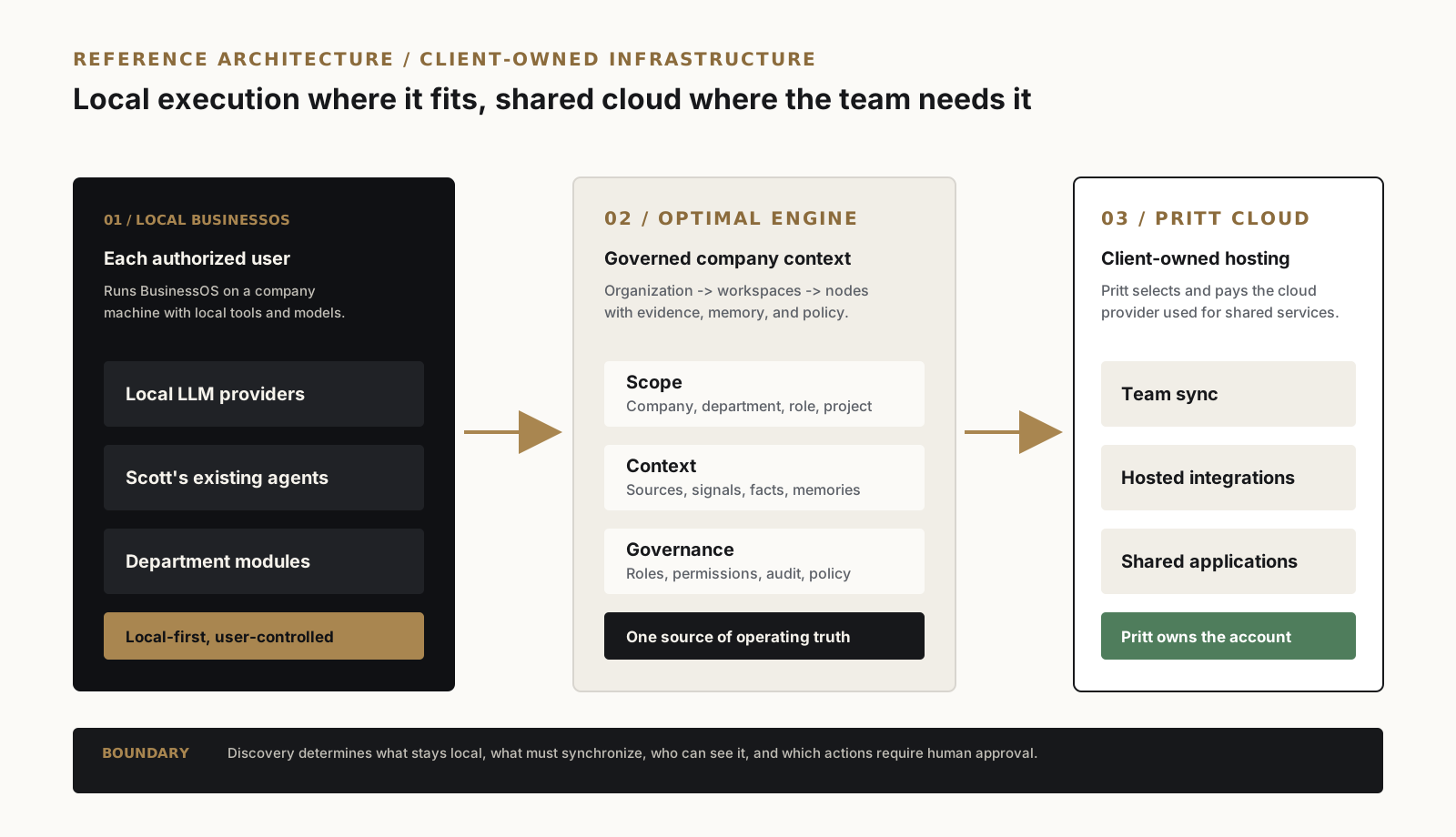
Three cooperating layers

BusinessOS is the operating surface. Optimal Engine is the governed brain. Pritt's cloud is the shared infrastructure boundary.

Local and cloud architecture
LayerPrimary responsibilityOwnership
BusinessOS desktopUser interfaceDepartment modules, commands, inbox, documents, decisions, tasks, agents, and local interaction.Installed for authorized Pritt users.
Optimal EngineContext and governanceOrganization topology, workspaces, nodes, search, memory lifecycle, context assembly, provenance, and policy.Open foundation plus Pritt-specific data and configuration.
Pritt cloudShared servicesTeam synchronization, hosted integrations, shared applications, controlled runtime, backups, and monitoring.Pritt-owned provider accounts and credentials.
Discovery requirement: no deployment placement is assumed until data sensitivity, collaboration needs, latency, cost, compliance, and Pritt's existing environment are validated.
MIOSAxMerydian
02 / Domain model

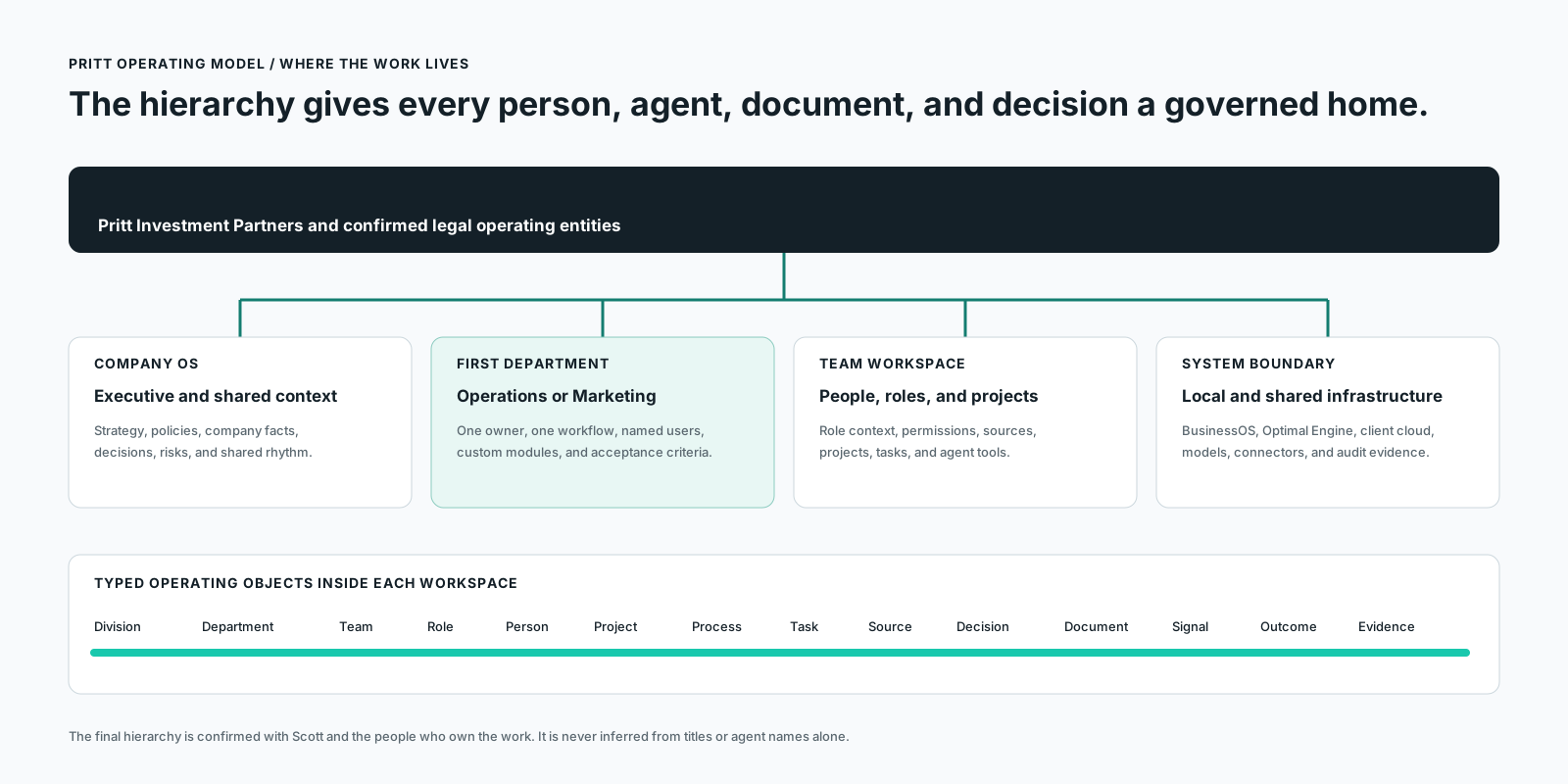
Where work lives

The organization hierarchy constrains retrieval, memory, permissions, interfaces, and agent action.

Work location model
Organization

Company boundary

Global identity, policy, shared definitions, service configuration, and cross-workspace authority.

Workspace

Operational boundary

Department context, members, modules, roles, agents, integrations, rhythm, and scoped memory.

Node

Work boundary

Projects, clients, workflows, assets, offers, risks, decisions, and other typed operating objects.

Source

Observed evidence

Documents, meetings, messages, records, APIs, and other inputs with preserved provenance.

Memory object

Accepted knowledge

Facts, decisions, commitments, lessons, and observations promoted through an explicit lifecycle.

Context package

Task-specific assembly

Only the relevant role, policy, history, data, tools, and acceptance contract for the current work.

Critical rule: agents do not search a single undifferentiated company corpus. Retrieval is constrained by organization, workspace, node, role, policy, freshness, and provenance.
MIOSAxMerydian
03 / Current-state ingestion

Evidence before migration

Pritt's current system is captured as a source package, then classified and accepted deliberately.

01 / Collect

Source package

Org chart, agent files, prompts, documents, tools, APIs, records, policies, examples, and failure history.

02 / Inspect

Inventory

Owners, formats, sensitivity, freshness, duplication, quality, dependencies, and system of record.

03 / Model

Transform

Map content into typed nodes, signals, claims, facts, memory objects, permissions, and schemas.

04 / Accept

Validate

Human review confirms definitions, authority, provenance, boundaries, and implementation readiness.

Repository / packagePurposeContents
Current-state packageEvidence snapshotPreserve what Pritt operates today without rewriting history.Raw exports, agent artifacts, document samples, inventories, transcripts, screenshots, and unresolved questions.
Discovery decision recordApproved modelRecord the language and boundary decisions that constrain implementation.Glossary, taxonomy, ontology, workflow contracts, data placement, owners, assumptions, and acceptance criteria.
Implementation repositoryExecutable systemBuild and validate reviewed configuration and code.Schemas, modules, integrations, migrations, tests, deployment files, runbooks, and versioned configuration.
Version-control principle: Pritt does not need to arrive with GitHub expertise. The delivery team establishes the repository structure, access model, change history, and handoff process with Pritt's technical owner.
MIOSAxMerydian
04 / Agent integration

Reuse before replacement

Existing agents become governed capabilities inside a role and workflow contract.

Role context flow
Agent inputValidation questionImplementation result
Commands and soul filesWhat behavior, tone, boundary, and objective do they encode?Versioned agent configuration with named owner and purpose.
Model and providerWhich capabilities, privacy constraints, cost, and latency actually matter?Provider policy and fallback rules rather than one hard-coded model.
Tools and integrationsWhat can the agent read, write, trigger, or approve?Scoped credentials, tool permissions, action contracts, and audit records.
Context and memoryWhich workspace, node, role, sources, and accepted facts apply?Task-specific context package with provenance and freshness.
Output and acceptanceWhat must be produced and who can accept it?Structured output schema, review state, and evidence return.
Human authority: consequential financial, legal, personnel, security, or irreversible external actions remain approval-gated unless Pritt explicitly defines another policy.
MIOSAxMerydian
05 / Execution and evidence

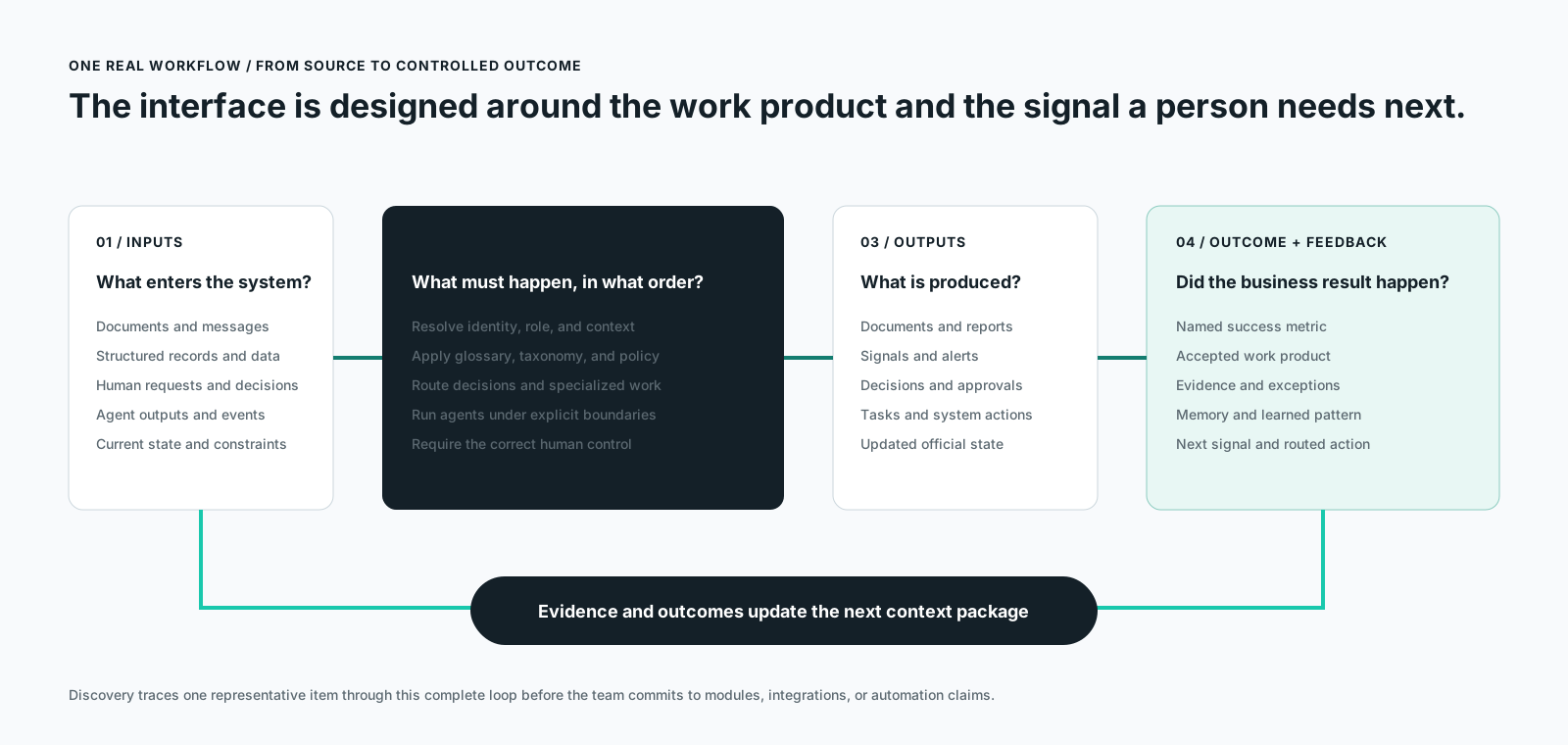
Close the operating loop

Execution is useful only when the result returns to the company model as inspectable evidence.

Execution and outcome loop
Before action

Assemble and authorize

Identify intent, scope, role, context, policy, tool, expected output, failure path, and approval requirement.

During action

Observe and constrain

Record state, provider calls, tool use, approvals, retries, cost, timeout, errors, and intermediate artifacts.

After action

Validate and return

Check output contract, collect human review, persist evidence, update work state, and propose memory changes.

After outcome

Learn safely

Record what happened, distinguish observation from fact, and promote only accepted knowledge into future context.

Acceptance evidence: test fixtures, real-user walkthroughs, execution records, corrected failures, data-boundary checks, permission checks, and signed acceptance decisions.
MIOSAxMerydian
06 / Technical acceptance

Definition of done

The first department proof is accepted only when the operating loop works for named users under agreed boundaries.

Pritt technical acceptance authority
Pritt business acceptance authority
Pilot environment and cloud owner
Agreed acceptance date
Expansion gate: no second department begins until the first department has an acceptance record, unresolved issues are classified, and the next scope is authorized separately.